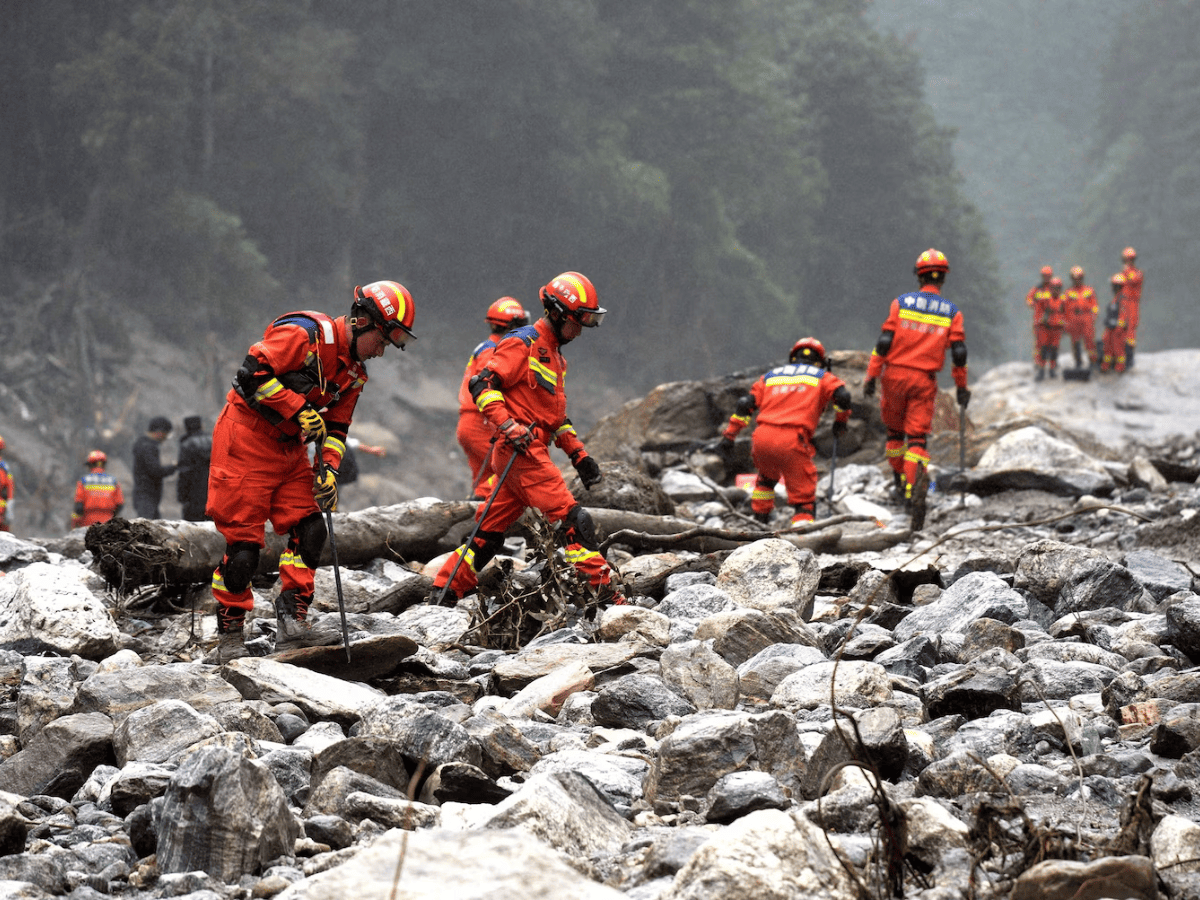
A catastrophic flood disaster has struck Nepal after a sudden surge of water, ice, rocks and mud swept through Himalayan valleys on August 26, 2026. The disaster was linked to a glacier collapse in the Trishuli River region near the Nepal-China border. Communities, roads, bridges and infrastructure were severely damaged, while thousands of people were reported missing. As search operations continue, the scale of the destruction is still being assessed.
What Happened in Nepal?
The disaster was triggered when a large volume of water and debris was released following a glacial collapse. A powerful surge was then sent through mountain valleys and river channels, where homes, roads and other structures were swept away or buried.
The Trishuli River Valley was among the worst-affected areas. Several hydropower facilities were damaged, while tunnels and access roads were blocked by enormous quantities of mud and debris. The destruction was made worse by the difficult Himalayan terrain, which has restricted access for rescue teams.
Why Are So Many People Missing?
Thousands of people have been listed as missing, but the number is still being revised as information is received and identities are confirmed. Recent reports have placed the number of missing people in Nepal at more than 4,000, while some newer reports have cited figures above 5,000.
Several factors have made searches particularly difficult. People were caught in fast-moving floodwaters, while others may have been buried beneath mud, rocks and collapsed structures. In addition, a large number of workers were believed to have been inside hydropower tunnels when the flooding occurred. Some tunnels were blocked, making access extremely challenging.
Importantly, being listed as missing does not necessarily mean that a person has died. Some people have been found alive after communication was restored or rescue teams reached isolated locations.
How Are Rescue Operations Being Conducted?
Search and rescue operations have been carried out by Nepalese authorities, security forces, engineers and specialist teams. Helicopters have been used to reach remote areas, while heavy machinery has been deployed to clear mud and debris.
Particular attention has been given to hydropower tunnels. On September 4, two workers were rescued alive from a Trishuli 3A tunnel after being trapped for nine days. The rescue demonstrated that survivors could still be reached despite the extreme conditions.
At the same time, identification of recovered bodies has been supported through forensic procedures, including DNA sampling from relatives. Search efforts are expected to continue as inaccessible areas are reached.
What Happens Next?
The immediate priority is expected to remain the search for missing people, treatment of survivors and restoration of essential services. Thousands of homes and major infrastructure have been damaged, and Nepal’s recovery needs are expected to be substantial.
According to a September 4 Reuters report, losses have been estimated at around $2.56 billion, with approximately 20,000 homes expected to require rebuilding. However, a detailed assessment is still being prepared.
The disaster has shown how quickly glacial and mountain hazards can affect communities in the Himalayas. For families still waiting for information, however, the search for missing relatives remains the most urgent concern.