Nepal’s latest flood disaster has left rescue teams searching across heavily damaged areas for people who remain unaccounted for. The catastrophe began on August 26, 2026, after a glacier collapse triggered a destructive surge of water, ice, rock and mud through valleys near the Nepal-Tibet border. By September 4, at least 1,287 deaths had been confirmed, while thousands were still reported missing.
Nepal Flood Disaster Leaves Tourists and Foreign Nationals Missing
The impact has been felt particularly strongly among tourists, pilgrims and foreign workers who were travelling or working in affected border areas. Some people who had initially been listed as missing have since made contact with authorities, providing relief to worried families. However, hundreds of foreign nationals have still been reported unaccounted for.
Search operations have therefore been focused on hospitals, evacuation centres, roads and isolated communities. Because major routes and bridges were damaged, access to several affected locations has been made difficult. Consequently, information about missing people has often been delayed.
Rescue Teams Search Flood-Damaged Areas Across Nepal
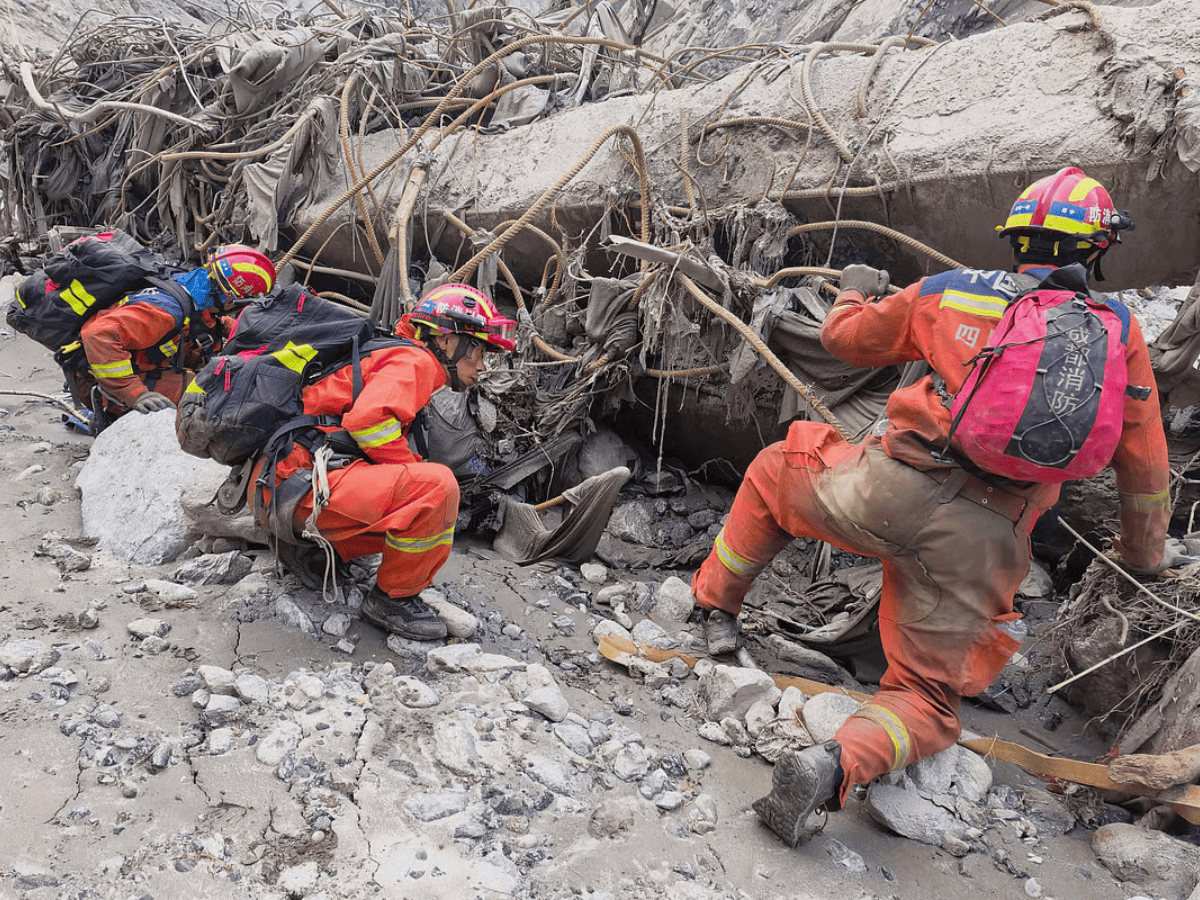
Rescue operations have been carried out by Nepalese security forces and specialist teams, with helicopters, heavy machinery and other equipment being used where possible. Particular attention has been given to hydropower facilities, where many workers were believed to have been trapped inside tunnels after mud and debris entered the sites.
A major breakthrough was achieved on September 4 when two workers were rescued alive from a tunnel at the Trishuli 3A hydropower project. They had reportedly been trapped for nine days before being reached by rescuers. The discovery has renewed hopes that other survivors could still be located.
Why Finding Missing People Has Become So Difficult
The search has been complicated by collapsed infrastructure, thick layers of mud and debris, and damaged roads. In addition, several hydropower tunnels have been difficult to access because entrances were blocked by material carried by the flood.
Technology has also been used to support the search. Drones have been deployed in some areas to locate stranded people, while engineers have shared tunnel plans and technical information with rescue workers. However, searches inside narrow and debris-filled tunnels remain particularly challenging.
Hope Remains for Missing Tourists and Survivors
Although the scale of the Nepal floods has been devastating, recent rescues have demonstrated that survival is still possible in some trapped locations. The rescue of two hydropower workers after nine days has provided renewed hope for families waiting for news.
Search operations are continuing, while authorities are also working to assess damage and support affected communities. For families of missing tourists and residents, however, uncertainty remains. As rescue teams continue working through difficult conditions, every confirmed contact or survivor discovery is being closely followed.